Wildlife Wonders: Nature's Hidden Treasures
Captivating moments of wildlife in their natural habitats, showcasing the beauty of nature.

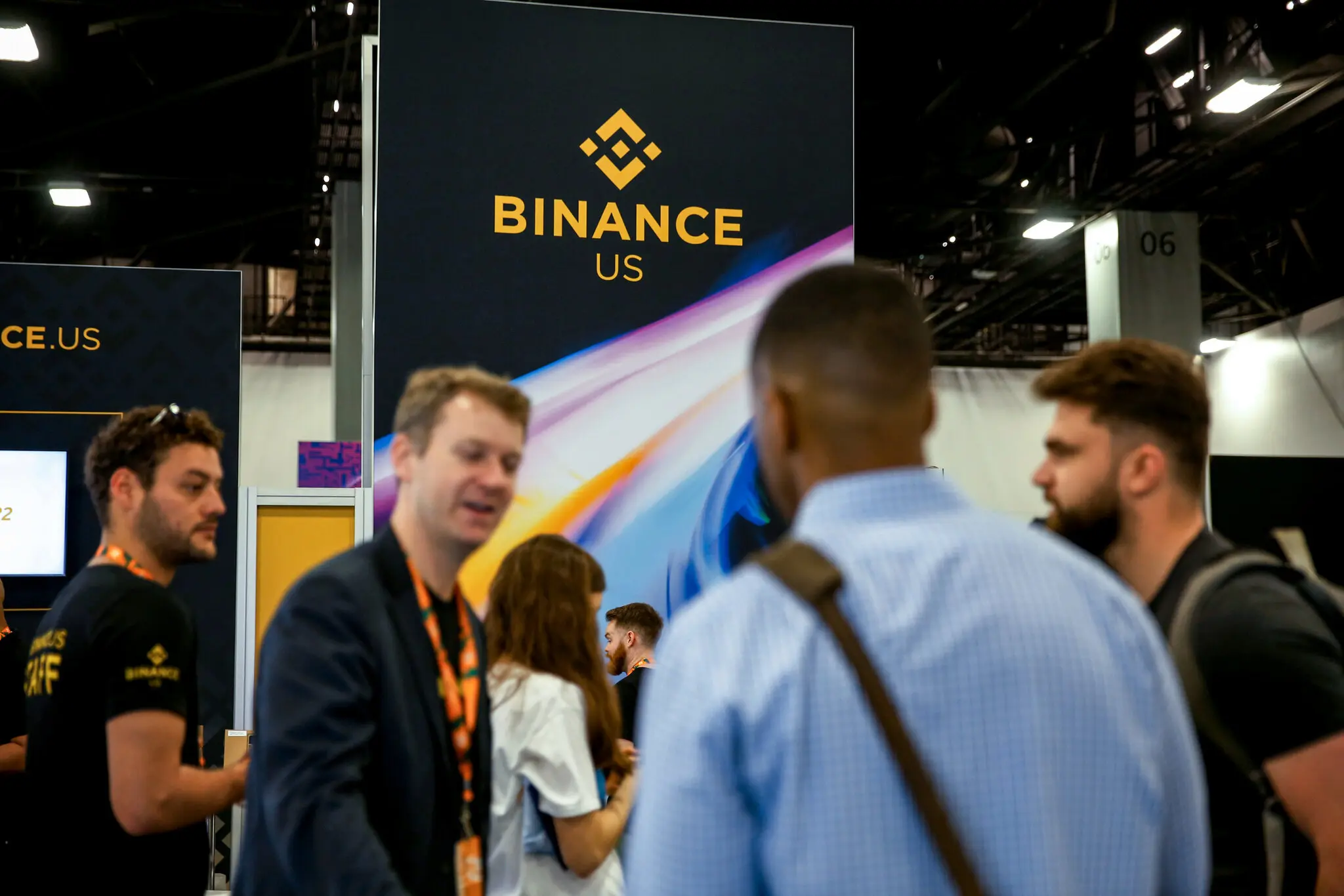
The world’s largest crypto exchange eliminated fees for the Trump family stablecoin, distributed $40 M in rewards, and provided the underlying technology — while the administration dropped enforcement and pardoned its founder.
Strong on transaction details and timeline; watch for framing that emphasizes conflict-of-interest implications without fully exploring alternative explanations or industry norms.
Connects financial relationships between Binance and the Trump family’s World Liberty Financial to regulatory actions taken by the Trump administration. Relies on financial disclosures, public records, and named sources.
Cites concrete dollar figures ($5 B in USD1 circulation, $2 B MGX investment, $40 M in rewards, ~$200 M annual yield), named entities, and dated regulatory actions. Readers can independently verify most claims.
The article documents the Binance–World Liberty relationship and the pardon/SEC dismissal in parallel but stops short of establishing direct quid pro quo evidence. The juxtaposition implies causation without proving it.
Discover what the story left out — data, context, and alternative perspectives
The article describes a textbook example of regulatory capture in real-time, but what it underplays is how the GENIUS Act—the very legislation Trump signed into law—creates the legal framework that legitimizes World Liberty Financial's operations while the Trump administration simultaneously dismantles enforcement against its key business partner. The stablecoin law requires 1:1 reserve backing, a standard World Liberty claims to meet through government money-market funds. But the deeper story is that Trump is both writing the rules and profiting from them: his company generates an estimated $200 million annually from the 4% yield on $5 billion in deposits—money that flows directly from regulations his administration championed.
The article notes the pardon of Changpeng Zhao and the SEC dropping its lawsuit against Binance, but stops short of connecting these dots to the structural transformation of U.S. crypto oversight. When Trump created a crypto working group in January and installed David Sacks as AI and Crypto Czar, he wasn't just changing policy—he was constructing a regulatory moat around his family's business interests. The departure of Bo Hines from the Council of Advisers on Digital Assets to "the private sector" further illustrates the revolving door between Trump's policy apparatus and the crypto industry itself.
The article mentions that 85% of USD1's $5 billion circulation sits on Binance, which "is available only outside the United States." This raises a critical question the article doesn't pursue: Where is this money actually coming from, and who are the beneficial owners?
Binance cannot legally operate in the U.S. market, yet the Trump family's stablecoin—issued by a company in which the sitting U.S. president holds a controlling stake—has become one of the world's top cryptocurrencies almost entirely through a platform barred from American soil. The $2 billion MGX investment from the UAE government, conducted entirely in USD1, suggests this is not a retail-driven phenomenon but rather a vehicle for sovereign wealth and international capital to gain influence with the Trump administration through commercial transactions.
The article states that Binance provided the "underlying technology" for USD1 "but not in exchange for anything," according to World Liberty's spokesman. This claim strains credulity. Binance eliminated trading fees specifically for USD1 conversions—a concession that sacrifices the exchange's primary revenue source. The company offered up to 20% interest on USD1 holdings and distributed $40 million in rewards. These are not neutral market actions; they represent multi-hundred-million-dollar marketing expenditures that functionally subsidize the Trump family business.
The article explains that stablecoin issuers "accept deposits from traders, give them coins in return and then invest the deposits to generate a yield that the issuers keep." This business model is essentially unregulated shadow banking. World Liberty takes customer deposits, invests them in money-market funds yielding ~4%, pays out promotional interest rates (sometimes up to 20%, as Binance offered), and pockets the spread.
The GENIUS Act passed by Congress creates federal standards for this activity, but the timing is telling: the law didn't exist when World Liberty launched. The company operated in a regulatory vacuum, then the Trump administration pushed through legislation that retroactively legitimizes the model. The 1:1 reserve requirement sounds like consumer protection, but it's actually a low bar—any legitimate stablecoin already maintains full reserves. The real gift is federal pre-emption of state money-transmission laws and "easier access to bank accounts," which removes the primary friction that kept crypto at arm's length from the traditional financial system.
Changpeng Zhao applied for a pardon in late April, and received it in October after serving just four months of his sentence for facilitating money laundering by terrorist groups and criminals. The article notes he "was allowed to remain Binance's majority shareholder" despite his felony conviction—an extraordinary outcome that essentially turns a criminal conviction into a minor business interruption.
The pardon doesn't just benefit Zhao personally; it rehabilitates Binance's ability to enter the U.S. market. With the SEC lawsuit dropped and the founder's record cleared, the primary legal obstacles to Binance operating domestically have been removed. This would give the exchange that holds 85% of USD1 circulation direct access to American customers, exponentially expanding the potential market for the Trump family's stablecoin.
Senator Warren and Senator Merkley's letter calling the arrangement "mind-boggling" opportunities for grift captures the dynamic: foreign governments and crypto moguls with criminal records can now purchase policy outcomes by transacting with Trump family businesses. The article quotes a Zhao lawyer saying there are "no conflicts of interest or quid pro quos," and a White House spokeswoman claiming assets in a trust eliminate conflicts. But when the president's children actively manage the businesses, when the president himself holds a controlling stake (per his financial disclosure), and when those businesses directly benefit from his administration's regulatory decisions, the trust structure is legal theater, not separation.
What the article misses entirely is the geopolitical dimension of stablecoin policy. The GENIUS Act represents the first comprehensive U.S. legislation on crypto, positioning stablecoins as a tool for extending dollar dominance in the digital age. By creating a clear federal framework, the U.S. is essentially blessing stablecoins as dollar-denominated instruments that can move globally without traditional banking infrastructure.
This has two contradictory effects: it cements the dollar's role in digital finance, but it also undermines the sanctions and compliance regime that gives the dollar its geopolitical power. Binance, after all, pleaded guilty to allowing terrorist groups and criminals to transact on its platform—precisely the activity that dollar dominance is supposed to prevent. By pardoning Zhao and dropping enforcement, the Trump administration is choosing commercial expansion over financial system integrity.
The UAE's $2 billion investment in Binance, executed via USD1, demonstrates how this plays out in practice. Gulf states seeking to diversify away from dollar dependence can now use Trump family stablecoins to conduct large-scale transactions outside traditional correspondent banking—all while technically remaining in dollars and potentially gaining influence with the U.S. president.
The article describes World Liberty as "the center of the family's crypto empire," alongside Trump's $TRUMP memecoin and the sons' American Bitcoin mining operation. But it treats these as separate business ventures rather than a coordinated policy-monetization strategy.
When Bo Hines left his White House crypto advisory role for "the private sector," the implicit message to industry was clear: help Trump family businesses, and you'll have regulatory access and possibly a future role. When David Sacks holds the dual portfolio of AI and Crypto Czar, it signals that emerging technology policy and the president's commercial interests are managed by the same apparatus.
The article quotes Binance saying it's "not uncommon for large exchanges to hold large amounts of certain tokens" and that they comply with applicable laws. Technically true. But what's historically unprecedented is a sitting president owning a crypto company that depends on an exchange founded by someone he pardoned, while his administration writes the laws governing both entities and dismantles enforcement against them.
The article states that Zhao's clemency "could pave the way for the company to break into the U.S. market." This is almost certainly the point of the entire arrangement. With the SEC lawsuit dropped, the pardon granted, and the GENIUS Act providing federal framework, the path is clear for Binance to reenter the U.S. with regulatory blessing.
When that happens, USD1 will instantly have access to American retail investors through the world's largest crypto exchange—a captive distribution channel worth potentially tens of billions in additional circulation. The promotional incentives Binance offered (fee elimination, 20% interest, $40 million in rewards) were likely not just marketing expenses but down payments on future U.S. market access.
The article states 85% of USD1 circulation sits on Binance, which operates only outside the U.S. It never asks where this money originates or who controls it. Without beneficial ownership data, you cannot assess whether this is retail adoption or sovereign/institutional capital seeking political access.
Binance eliminated trading fees for USD1 and offered up to 20% interest plus $40 M in rewards. If similar programs exist for competing stablecoins, the USD1 treatment is standard business practice. If not, it suggests a preferential arrangement. The article never checks this.
The White House claims a trust structure eliminates conflicts. But Trump’s financial disclosure shows a controlling stake, and his sons actively manage World Liberty Financial. The article mentions the trust defense but doesn’t analyze whether it provides meaningful separation under federal ethics law.
The claim contains verifiable elements but requires important clarification regarding the timeline of regulatory actions. The article's characterization of Trump "ending a regulatory crackdown that began in his first administration" is imprecise and potentially misleading, though the overall direction of policy shift toward crypto-friendly regulations is supported.
The claim that Trump ended "a regulatory crackdown that began in his first administration" mischaracterizes the chronology. The major crypto regulatory enforcement actions occurred after Trump's first term ended in January 2021, during the Biden administration. The SEC under Gary Gensler (appointed by Biden) pursued aggressive enforcement against crypto companies from 2021-2024. Trump's first administration (2017-2021) did not initiate a comprehensive regulatory crackdown on cryptocurrency.
However, the article's core assertion about a policy reversal is substantiated: Trump's second administration has indeed adopted a dramatically more favorable stance toward cryptocurrency regulation compared to the Biden-era enforcement approach.
Trump's October 2024 pardon of Changpeng Zhao is well-documented. Zhao had been convicted in 2023 of failing to maintain proper anti-money-laundering standards and served a short prison term before receiving clemency. This pardon directly removed a significant obstacle to Binance's potential expansion into U.S. markets, as the article suggests.
The factual record strongly supports that policy changes benefit both entities:
Binance's expansion trajectory: Within days of Zhao's pardon, Binance.US listed the Trump-linked USD1 stablecoin—specifically five days after the October 23 pardon. Binance subsequently secured three new licenses in Abu Dhabi covering exchange, clearing, and broker dealer activities. A more permissive U.S. regulatory environment would directly facilitate Binance's goal of operating in American markets.
World Liberty's business model: Trump co-founded World Liberty Financial, which issued the USD1 stablecoin. The stablecoin business model depends heavily on exchange partnerships—Binance launched zero-fee trading pairs for USD1 and converted all its BUSD collateral to USD1 at a 1:1 rate within one week. Approximately 90% of all USD1 remains in Binance-controlled wallets, potentially generating tens of millions in interest.
The USD1 capitalization reached $2.7 billion, substantially boosted by a $2 billion investment from Abu Dhabi-based MGX into Binance, fully settled in USD1. Bloomberg reporting indicates that Binance wrote the foundational smart contract code for USD1, the stablecoin issued by World Liberty Financial. By mid-March, the two entities were reportedly discussing a new stablecoin on BNB Smart Chain.
Crypto initiatives tied to Trump have reportedly added at least $620 million to his fortune in recent months.
Both parties have issued strong denials of impropriety. Richard Teng, Binance's CEO, firmly denied that the platform supported USD1 to obtain Zhao's presidential pardon. World Liberty Financial described Bloomberg allegations as "factually deficient and designed to further a political agenda." Binance noted that USD1 was already listed on other major exchanges including Coinbase, Robinhood, and Kraken before Binance.US added it.
Partially accurate with timeline correction needed: Trump has indeed reversed crypto regulatory policy, but the "crackdown" occurred primarily during the Biden administration, not Trump's first term. The policy shift demonstrably benefits both Binance's U.S. expansion goals and World Liberty's stablecoin business model through the documented technical partnership, promotional incentives, and regulatory environment changes that facilitate cryptocurrency exchange operations.
Binance’s spokesperson made this claim, but the exchange simultaneously eliminated fees, offered 20% interest, and distributed $40 M in rewards for USD1 — concessions worth hundreds of millions. The article reports the denial without testing it against the financial evidence.
The arithmetic is straightforward: $5 B × 4% = $200 M. The underlying assumptions (total circulation, money-market yield) are verifiable through on-chain data and public fund rates. This is one of the article’s strongest factual claims.
Any legitimate stablecoin already maintains full reserves — this is table stakes, not a high bar. The real regulatory gift is federal pre-emption of state money-transmission laws and easier bank access, which the article mentions but doesn’t frame as the more significant provision.
Establishes the policy apparatus that will oversee crypto regulation, including stablecoin rules that directly affect World Liberty Financial.
Zhao was convicted of facilitating money laundering by terrorist groups and criminals. He remained Binance’s majority shareholder throughout his sentence.
Removes the two primary legal obstacles to Binance operating in the U.S. market. Clears the path for domestic distribution of USD1.
Creates federal framework requiring 1:1 reserves but also pre-empting state money-transmission laws. Retroactively legitimizes World Liberty Financial’s operating model.
Makes USD1 one of the world’s top stablecoins. The $2 B MGX investment from the UAE, conducted entirely in USD1, accounts for a significant portion.